
Our Equipment
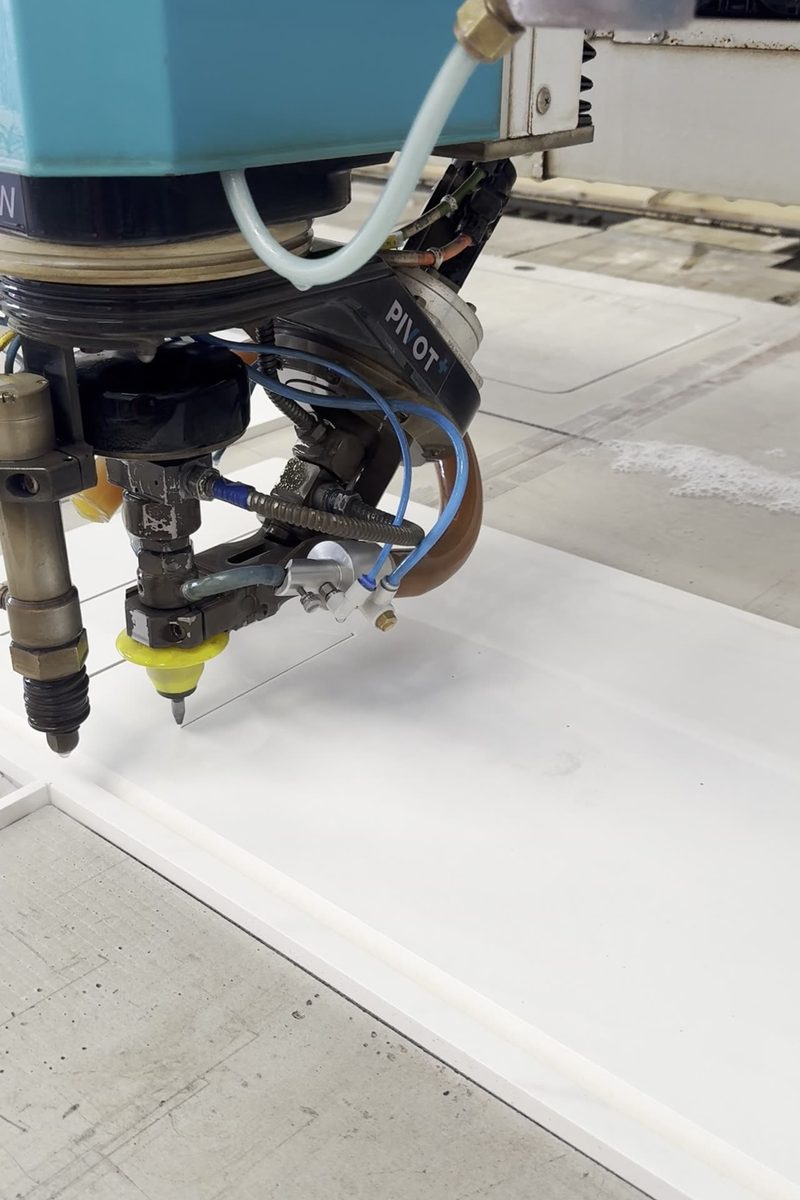
State-of-the-Art Technology
Flow Mach 200c Waterjet Cutter
The Flow Mach 200c is one of the most advanced waterjet cutting systems in the industry. Manufactured by Flow International — the inventors of ultra-high-pressure waterjet technology — this machine represents the pinnacle of precision cutting capability.
With our investment in this technology, we can offer our customers cutting precision, speed, and versatility that few shops in Central Florida can match.
Technical Specifications
The numbers behind the precision.
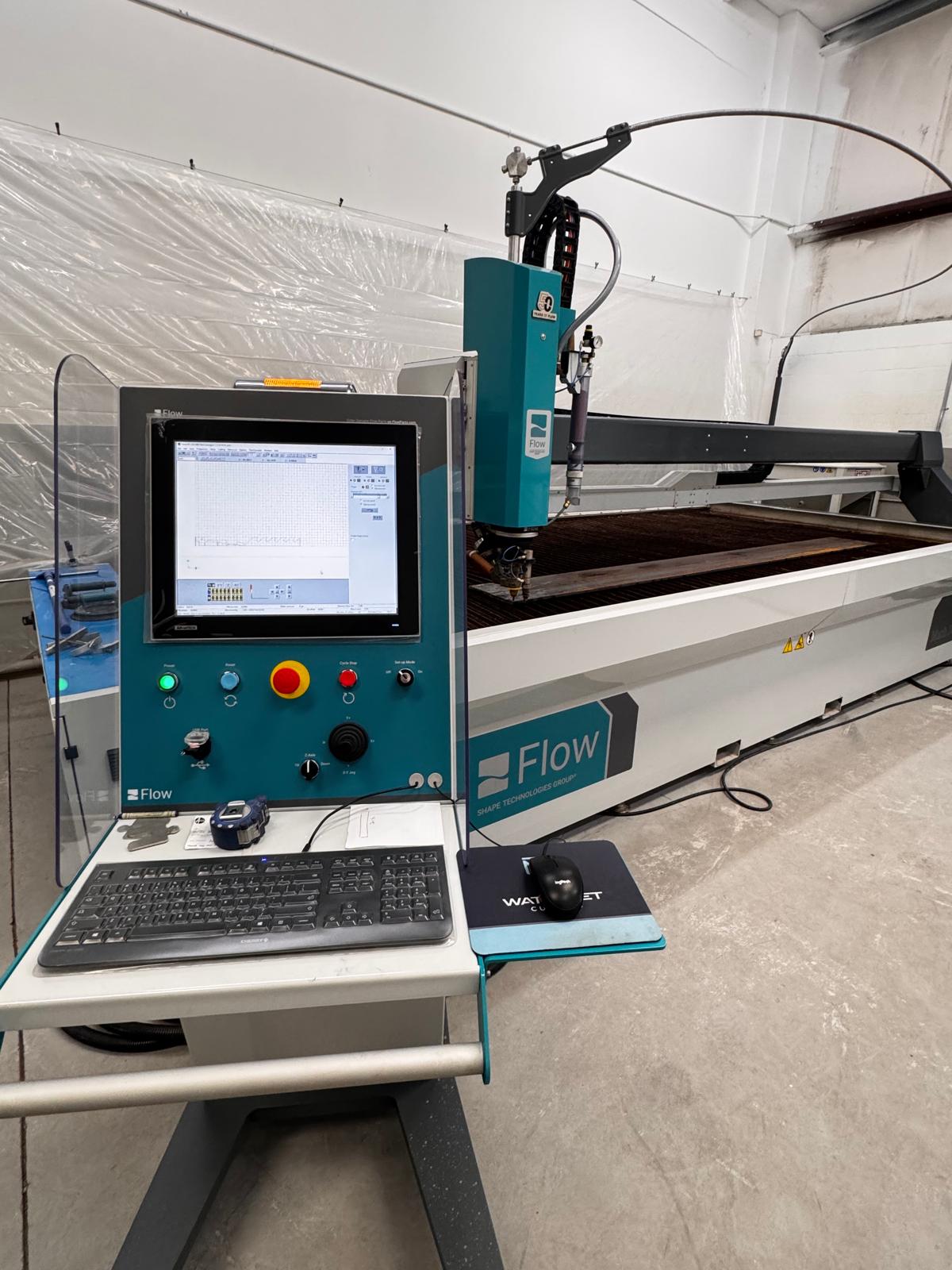
Key Features & Capabilities
What makes our Flow Mach 200c the right machine for your project.
5-Axis Cutting
The Pivot+ head tilts up to ±60°, enabling beveled edges, countersinks, and complex 3D contours. Eliminates taper inherent in standard waterjet cutting.
Dynamic Taper Control
Automatically compensates for the natural taper of the waterjet stream, producing parts with perfectly perpendicular edges.
FlowMaster™ Software
Advanced CAD/CAM software optimizes cut paths for speed and quality. Imports DXF, DWG, STEP, AI, and other standard formats.
Cold Cutting Process
No heat is generated during the cutting process. Material properties remain unchanged — no hardening, annealing, warping, or discoloration.
Universal Material Compatibility
Cuts metals, stone, glass, composites, rubber, plastics, ceramics, and virtually any other material — all on the same machine.
Minimal Material Waste
Ultra-thin kerf (0.030"-0.040") means minimal material waste compared to plasma, laser, and traditional machining methods.
Beyond the Cutter: Our Complete Shop
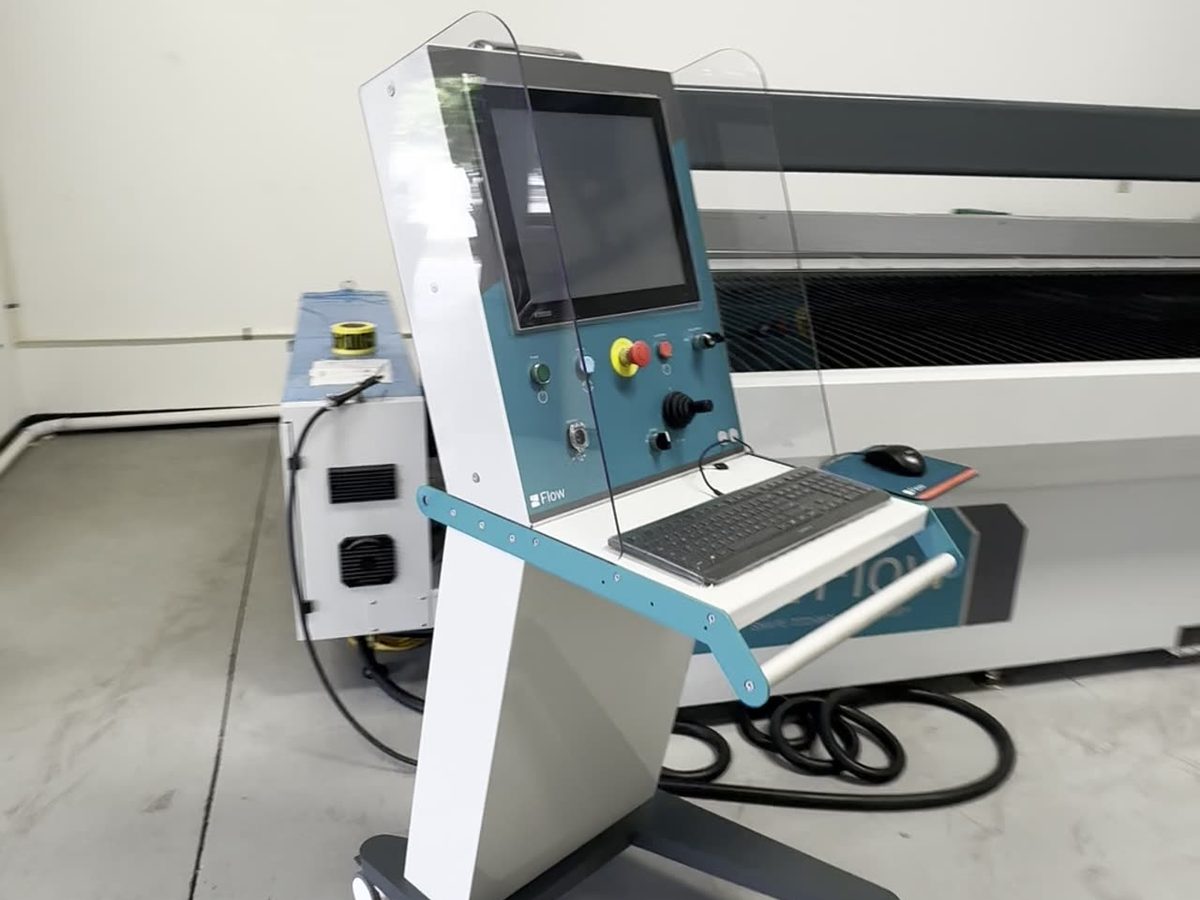
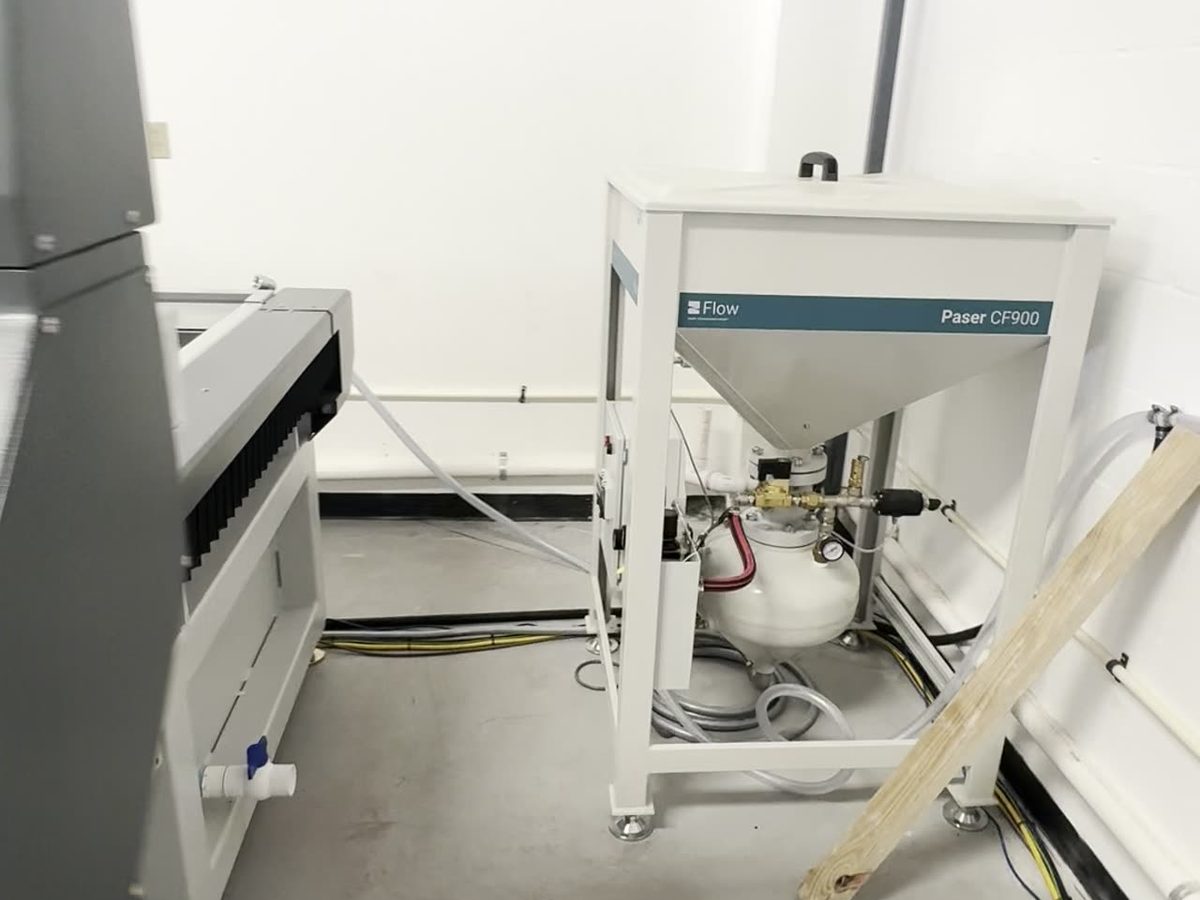
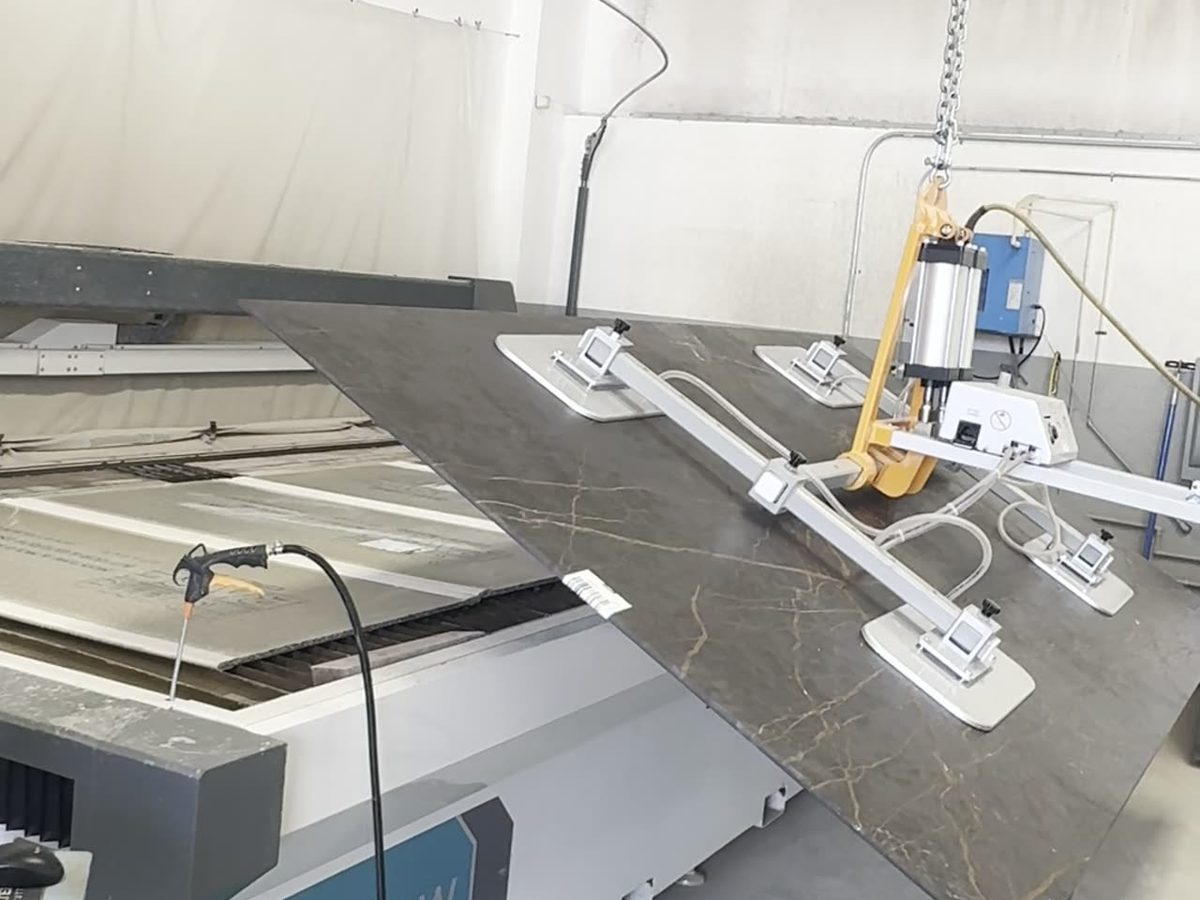
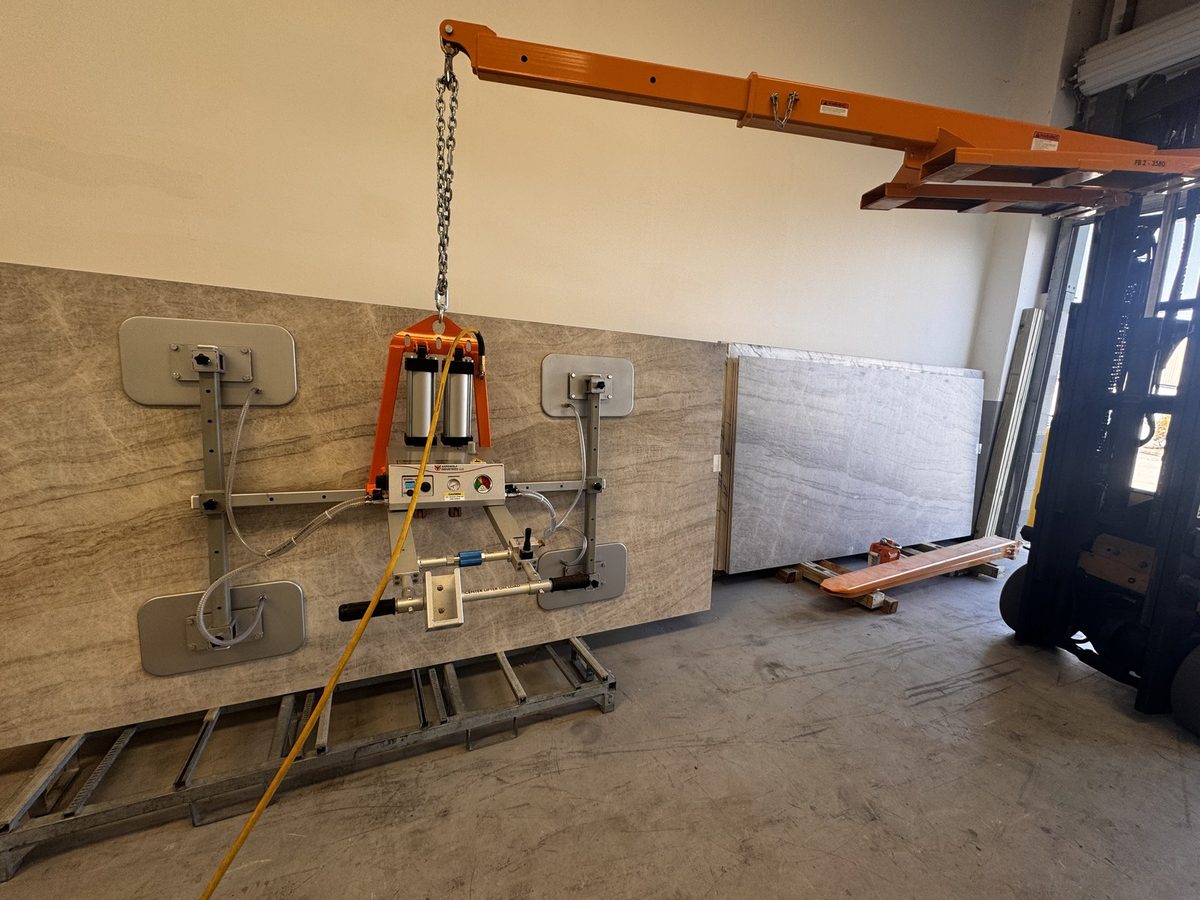
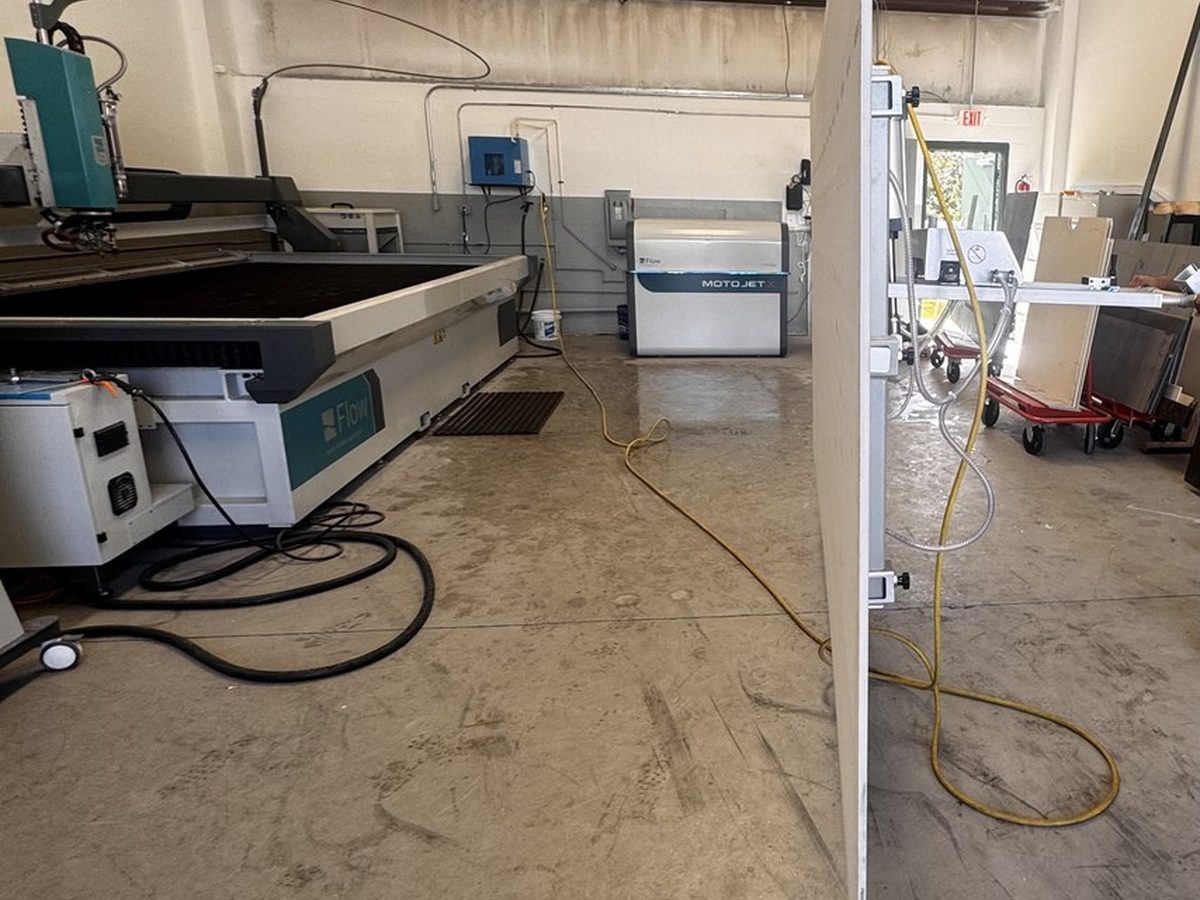
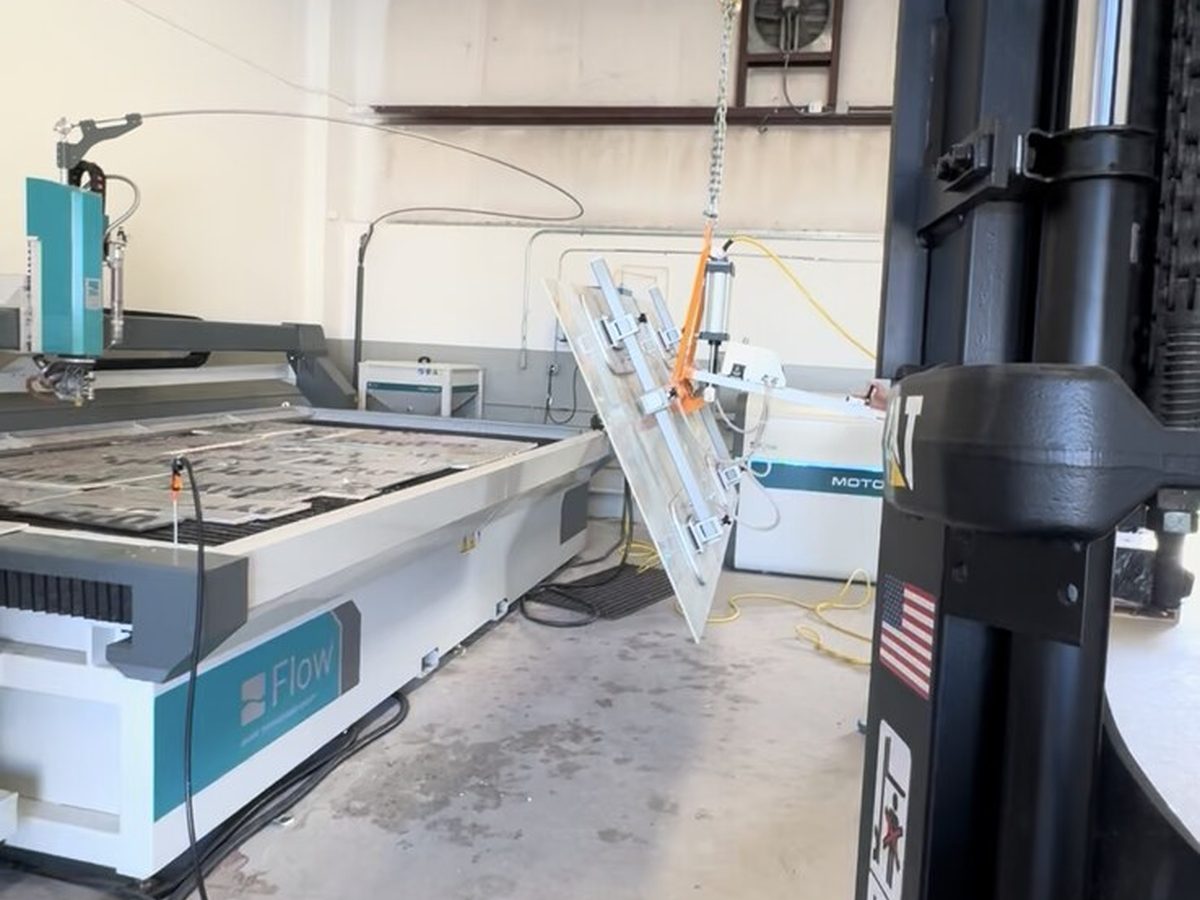
Our Apopka, FL facility houses the complete waterjet operation under one roof — software, abrasive systems, material handling, and the cutter itself.
How Waterjet Cutting Works
A simple overview of the technology behind our precision cutting.
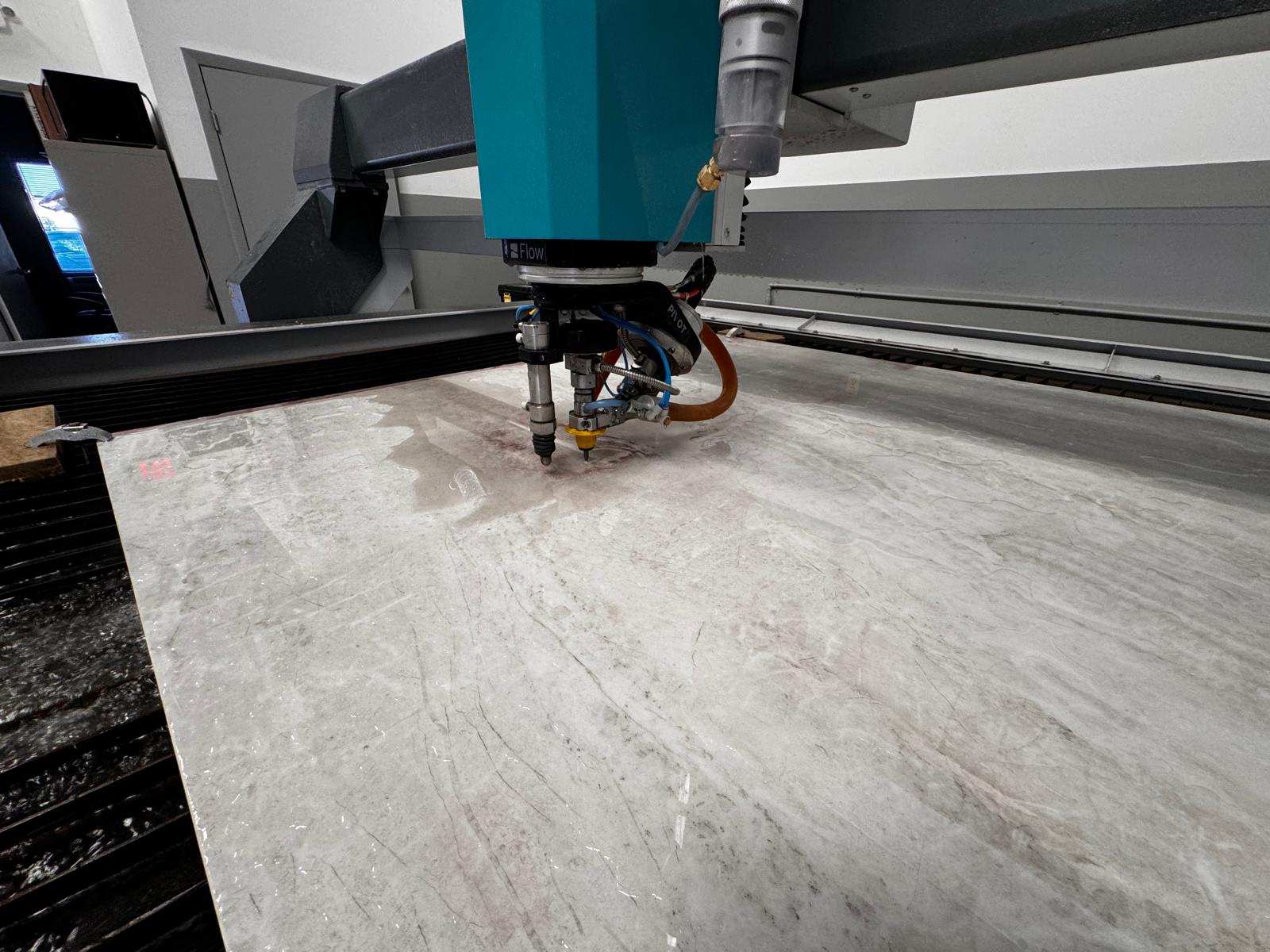
The Science of Waterjet
Waterjet cutting uses an ultra-high-pressure stream of water — up to 60,000 PSI — to cut through materials. For harder materials like metal and stone, a fine garnet abrasive is added to the water stream.
The water stream exits the cutting nozzle at speeds up to 2,500 mph (Mach 3), creating a cutting force that can slice through virtually any material with extreme precision.
The process in 4 steps: